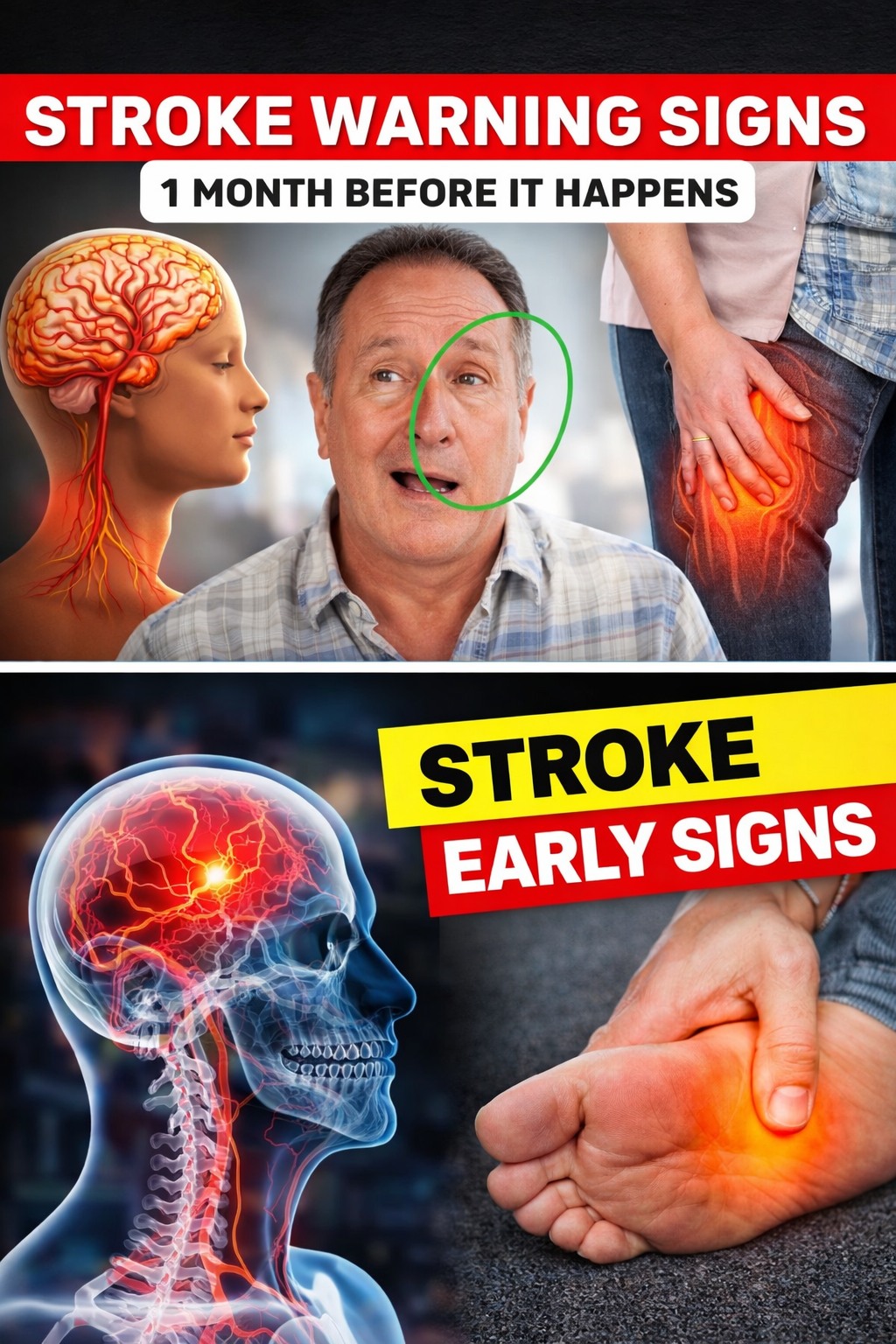
Did you know that someone in the United States has a stroke every 40 seconds, and nearly 800,000 people suffer one each year? For adults over 55, the risk rises sharply, yet many warning signs appear weeks or even a month before the main event — signs that are frequently ignored until it’s too late.
Imagine this: You wake up one morning with a strange tingling in your arm that fades by afternoon, a sudden dizzy spell while walking the dog, or a brief episode of slurred words that you brush off as tiredness. A month later, you realize those subtle changes were your body’s urgent warnings — warnings that, if heeded, could have changed everything.
Rate yourself right now on a scale of 1-10: How often do you notice fleeting symptoms like numbness, dizziness, sudden headaches, or speech changes that you dismiss as “nothing”? Hold that number. If it’s a 4 or higher, especially if you’re over 50, what you’re about to read could literally save your life or the life of someone you love
As someone who has studied stroke prevention and early warning signs to help American families stay protected — busy professionals, active parents, and seniors who want to enjoy many more healthy years — have you ever felt that quiet unease when a strange symptom appears and then disappears, leaving you wondering if you should worry? What if recognizing these 8 warning signs one month before a stroke, combined with 9 powerful prevention tips, could dramatically lower your risk? Stick around as we uncover the science, real stories, and practical steps that could make all the difference. You’ll be surprised by how many signs are easy to miss — and how much control you actually have.
Turning 55 or beyond often means facing unexpected hurdles with vascular health you never anticipated. One day you feel fine; the next, a transient episode of weakness or vision changes leaves you shaken. Recent data shows that up to 30% of strokes are preceded by warning events called transient ischemic attacks (TIAs), yet many people dismiss them as minor. It’s frustrating when you experience something odd but convince yourself it’s “just stress” or “getting older” — sound familiar?